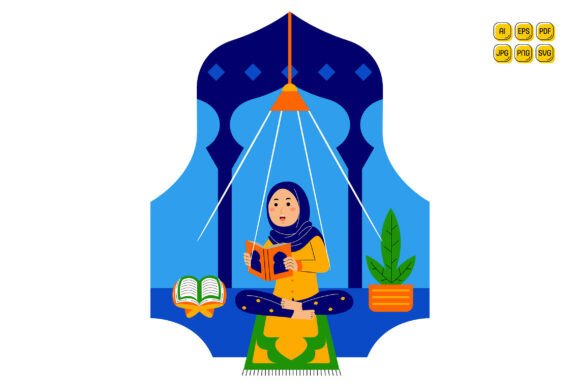
Woman Reading Quran in Mosque Illustration
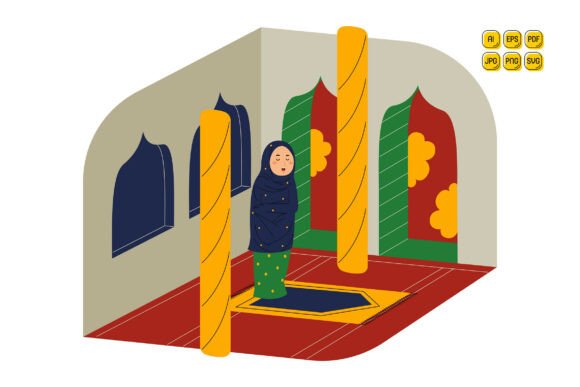
A beautifully composed Woman Reading Quran in Mosque illustration captures quiet reverence, spiritual focus, and cultural authenticity. It’s not just a scene—it’s a visual anchor for meaning, respect, and intention. Designed with care and clarity, this illustration reflects calm devotion: a woman seated respectfully in a mosque interior, gently holding an open Quran, surrounded by subtle architectural details like arches, soft light, or gentle geometric patterns—all rendered in clean, flat design style.
Why This Illustration Resonates Across Audiences
Whether you're designing a Ramadan campaign, launching an Islamic education platform, or building a wellness blog focused on mindful spirituality, this image carries emotional weight and cultural resonance. It avoids stereotypes, honors tradition, and centers dignity—making it ideal for audiences who value authenticity over cliché. Unlike generic stock photos, it’s crafted to feel both timeless and contemporary, balancing reverence with approachability.
What Makes It So Flexible?
The real strength lies in its vector foundation. Every element—the woman’s attire, the mosque’s columns, the Quran’s cover, even the texture of the prayer rug—is built as individual, editable shapes. That means you’re never locked into one look. Need warmer tones for a spring-themed newsletter? Adjust the palette in seconds. Want to match your brand’s teal-and-cream identity? Recolor with precision. Planning a bilingual social media post? Swap the Arabic calligraphy on the Quran page for a custom phrase—or leave it blank for flexibility.
- Resize without pixelation: Whether scaling down for an Instagram story (1080×1350) or up for a large-format print banner (10,000×4,000 px), the vector files retain crisp edges.
- Layer control matters: In Adobe Illustrator, each shape sits on its own layer—hair, hijab, background arch, floor pattern—so you can hide, recolor, or reposition anything independently.
- Format versatility: SVG works natively on websites; PNG gives you transparency for overlays; JPG delivers high-res fidelity for print; PDF ensures universal viewing; EPS supports legacy workflows.
Real-World Uses You’ll Appreciate
This isn’t just decoration—it’s functional visual infrastructure. Educators use it in printable worksheets about Islamic practices. Bloggers embed the SVG version directly into WordPress posts for fast loading and responsive scaling. Small business owners feature it on landing pages for halal-certified product launches. Mosque committees adapt it for digital newsletters or printed Eid greeting cards. Freelance designers combine it with custom typography to build branded social media kits—no need to start from scratch.
Imagine launching a new online course on Quranic reflection. You could place the illustration beside a short quote in clean sans-serif type, add a soft gradient overlay, and export it as a Facebook cover image—all in under five minutes. Or create a series of infographics: same base illustration, but with different colored accents highlighting themes like “patience,” “gratitude,” or “intention”—each variation reinforcing your message without visual fatigue.
Beginner-Friendly Customization Tips
If you're new to vector editing, start simple. Open the AI file in Illustrator, select the woman’s hijab using the Selection Tool, then click a new color in the Swatches panel. Done. To soften the background, lower the opacity of the mosque wall layer—not the whole image. Want to emphasize movement or flow? Duplicate her hand holding the Quran, rotate slightly, and adjust stroke width to suggest gentle gesture.
You don’t need advanced skills to make meaningful changes. Even basic edits—swapping a neutral beige for deep indigo, adding a subtle shadow under the Quran, or cropping tightly to focus on her expression—can shift tone dramatically. And because all 100 illustrations share the same stylistic language, mixing elements across scenes (e.g., placing this woman in front of a mosque courtyard from another illustration) feels cohesive, not jarring.
Things to Keep in Mind Before Using
Cultural sensitivity is essential. While this illustration is thoughtfully designed, always consider context. For example, using it in promotional material for non-religious products may unintentionally dilute its significance—unless carefully framed with respect and clarity. Likewise, avoid altering core symbolic elements (like covering the Quran text entirely or distorting posture in ways that contradict traditional practice) without thoughtful consultation.
Also remember: resolution and format choice depend on use. For web banners, SVG or optimized PNG keeps load times low. For large printed posters, stick with the full-size JPG or PDF at 300 DPI. And if you’re sharing files with clients or collaborators who don’t use Illustrator, the included PDF and SVG versions ensure they can still preview and approve layouts easily.
Finally, think long-term. Since you receive 100 coordinated illustrations—not just one—you’re investing in a scalable visual system. That means consistency across platforms, faster turnaround on seasonal campaigns (Ramadan, Hajj, Eid), and room to grow your brand voice visually without hiring a designer every time.
Design With Purpose, Not Just Aesthetics
At its best, the Woman Reading Quran in Mosque illustration does more than look good—it invites pause, signals intention, and affirms values. It supports creators who want their visuals to reflect depth, not just decoration. It empowers educators to teach with imagery that uplifts rather than oversimplifies. And it gives businesses a way to connect authentically with communities that value sincerity, beauty, and spiritual grounding.
Whether you're sketching your first social media calendar or refining a decade-old brand identity, having this kind of adaptable, respectful, technically robust asset makes every design decision clearer—and every outcome more meaningful.