Object Hand Gesture Illustration
Have you ever struggled to show how a user interacts with an app—without cluttering your screen with text or complex screenshots? Or needed a quick, clear visual to explain a step in a tutorial, presentation, or training guide? That’s where Object Hand Gesture Illustration steps in—not as abstract art, but as purpose-built visual tools that communicate action, direction, and intent at a glance.
What Exactly Is Object Hand Gesture Illustration?
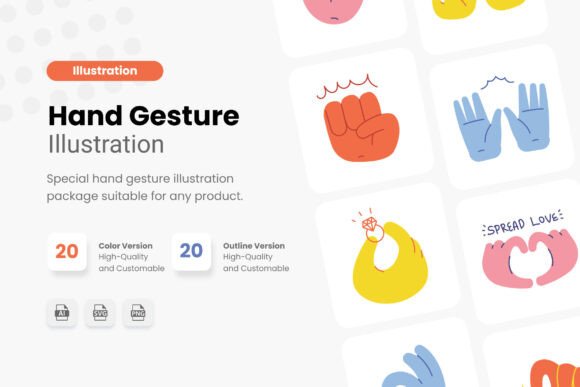
At its core, an Object Hand Gesture Illustration is a stylized, clean drawing of a hand interacting with an object—like tapping a phone screen, swiping left on a tablet, pinching to zoom, or holding a smartwatch. It’s not just a hand. It’s a hand *doing something meaningful*, paired with a recognizable digital or physical object. The “Object Hand Gesture Illustration Set” you’ll find on Creative Fabrica includes 10 distinct scenes: each one shows a different gesture (point, drag, scroll, select, etc.) combined with everyday tech or interface elements—all drawn in a modern, minimalist style.
Think of them like visual verbs: they don’t just sit there—they show movement, intention, and context. And because they’re designed with bold shapes and minimal detail, they stay legible even at small sizes—on mobile UIs, slides, or printed handouts.
Why Designers, Educators, and Creators Reach for These Illustrations
Clarity matters—especially when time is short. A well-placed hand gesture illustration can replace three sentences of explanation. For example:
- A marketer building a product demo video uses the “tap + smartphone” illustration to highlight a key feature without voiceover.
- An educator creating an online safety guide drops the “hand pointing to warning icon” into a slide—no ambiguity about where attention should go.
- A freelance UX designer sketches a quick wireframe and overlays the “swipe + tablet” illustration to convey interaction flow before writing a single line of code.
These aren’t decorative extras. They’re functional assets—designed to support understanding, reduce cognitive load, and guide the viewer’s eye naturally through a process or idea.
Where These Illustrations Fit Naturally
You don’t need to be a professional designer to benefit from this set. Its flexibility makes it useful across many real-world contexts:
- Websites & apps: Use SVG versions for crisp, responsive icons in onboarding flows or tooltips.
- Presentations & pitch decks: Drop PNGs with transparent backgrounds directly into PowerPoint or Google Slides—no white boxes, no resizing headaches.
- Tutorials & e-learning: Layer gestures over screenshots to show exactly where and how to click, drag, or scroll.
- Printed materials: The AI and SVG files scale infinitely—so whether it’s a 4-page workshop handout or a large-format poster, quality stays sharp.
- Social media & blog graphics: Pair a “hand + laptop” illustration with a tip about keyboard shortcuts—it’s relatable, visual, and shareable.
Because every file comes with a transparent background, you can place these illustrations over photos, gradients, or brand colors without extra editing.
What Makes This Set Stand Out
Not all gesture illustrations are created equal. What sets this collection apart isn’t just aesthetics—it’s thoughtful design logic:
- Consistent style: All 10 illustrations share the same line weight, color palette, and proportion—so mixing them feels intentional, not accidental.
- Fully editable vectors: Open the AI file in Adobe Illustrator and tweak colors, resize objects, or adjust stroke thickness—no pixelation, no loss of control.
- Multiple formats, one purpose: SVG for web use, PNG for quick drag-and-drop, AI for deep customization—all included, no extra downloads or conversions needed.
- Exclusively available: These are original, hand-crafted visuals—not stock templates reused across thousands of sites. That means your projects keep their distinct voice and visual identity.
Things to Keep in Mind Before You Use Them
While these illustrations are incredibly versatile, a few practical notes help you get the most out of them:
- Context is key: A “pinch-to-zoom” hand works great in a photography app tutorial—but might confuse readers in a finance report. Match the gesture to your audience’s experience level and subject matter.
- Don’t overload: One strong gesture illustration per concept is usually more effective than stacking several. Let each image breathe—and do its job clearly.
- Check accessibility: When using in digital interfaces, pair gestures with descriptive alt text (e.g., “Right hand tapping blue ‘Send’ button on smartphone screen”) so screen readers convey meaning too.
- Respect usage rights: These files are licensed for personal and commercial use—but only when downloaded directly from Creative Fabrica. Sharing the files themselves isn’t allowed, though sharing the product page link is fine.
A Small Tool With Real Impact
It’s easy to overlook simple visuals—until you try explaining a process without them. Object Hand Gesture Illustration bridges the gap between instruction and intuition. Whether you’re launching a new SaaS tool, teaching middle-schoolers how to navigate a learning platform, or designing packaging for a smart home device, these illustrations quietly strengthen your message. They add warmth without clutter, clarity without complexity, and professionalism without pretense.
And because they come ready-to-use in both vector and raster formats—with no licensing surprises—you spend less time prepping assets and more time focusing on what really matters: helping people understand, engage, and act.